Understanding Prostate Conditions: Enlarged Prostate (BPH) & Prostate Cancer
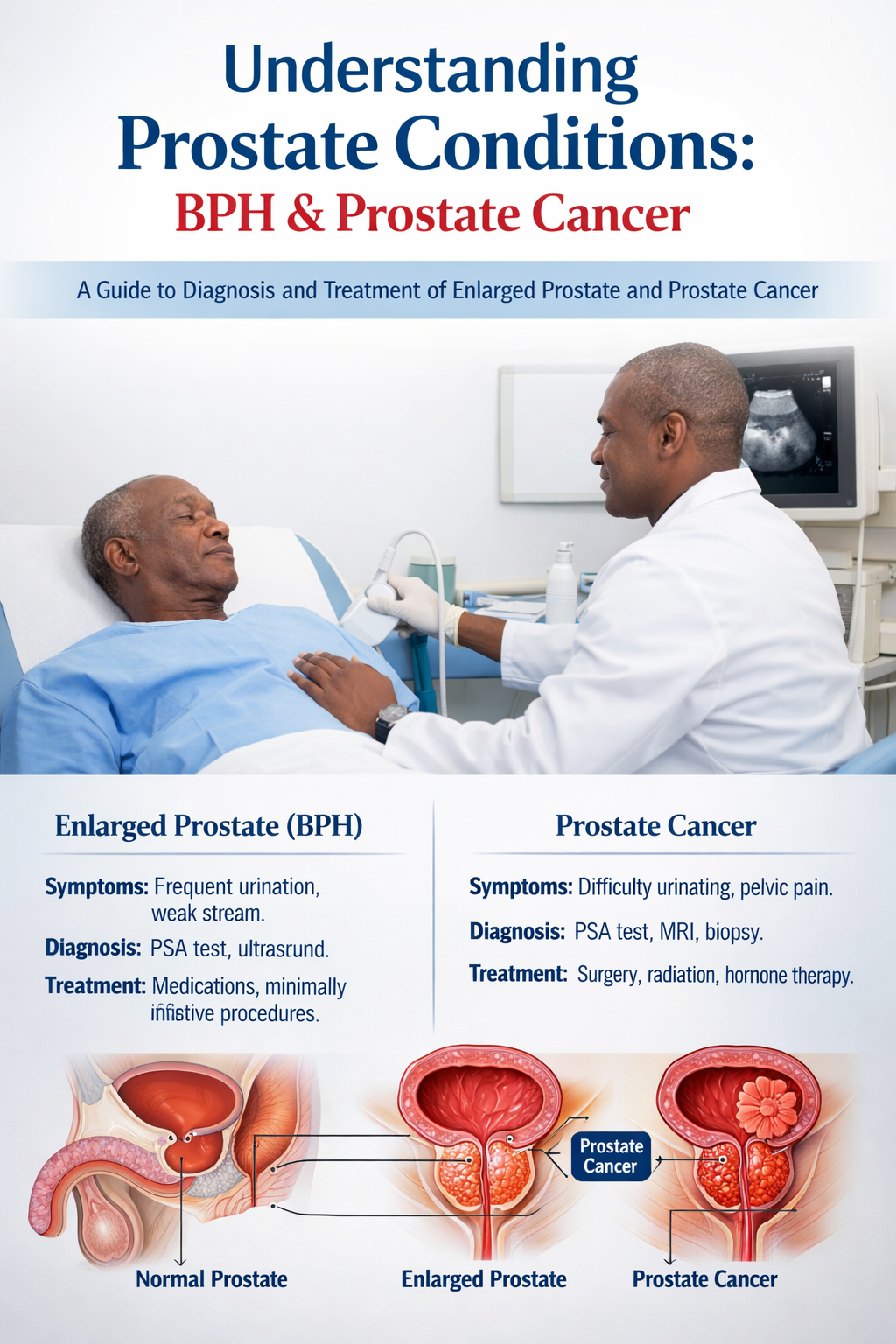
🔹 What is BPH? Benign Prostatic Hyperplasia (BPH) is a non-cancerous enlargement of the prostate gland. It is common in men over 50 and results from natural aging and hormonal changes. Symptoms include: Frequent urination, especially at night (nocturia) Weak or interrupted urine stream Difficulty starting urination Feeling of incomplete bladder emptying Diagnosis: Digital Rectal Exam (DRE): Assesses prostate size and texture Urine tests: Rule out infections Prostate-Specific Antigen (PSA): Elevated PSA may suggest BPH or cancer Ultrasound or urinary flow tests Treatment: Lifestyle changes (reduce caffeine, alcohol, fluids before bed) Medications (alpha-blockers, 5-alpha reductase inhibitors) Minimally invasive procedures (TURP, laser therapy, UroLift, Rezum water vapor therapy) 🔹 What is Prostate Cancer? Prostate cancer occurs when cells in the prostate grow uncontrollably. It is one of the most common cancers in men worldwide. Symptoms (often similar to BPH): Difficulty urinating Weak urine stream Pelvic pain Blood in urine or semen Diagnosis: PSA test: High levels may indicate cancer MRI or ultrasound imaging Prostate biopsy: Confirms cancer by examining tissue samples Treatment options: Active surveillance (for slow-growing cancers) Surgery (prostatectomy) Radiation therapy Hormone therapy Chemotherapy (for advanced cases)
Have A Question About This?
Reach out to Dr. Mutiso directly for personalised advice.
1 Comment
Greate read
Leave a Comment